Ekranoplans have fascinated enthusiasts for decades, with numerous hobby builds of RC models and piloted craft. I propose an ultralight recreational ground-effect vehicle that blends existing designs and uses off-the-shelf components. It would have Lippisch-style aerofoil and be powered by a hybrid system with petrol paramotor for cruising and electric motors for takeoff and steering.
Related idea: Cri-kranoplan
What is “ekranoplan”, and why?
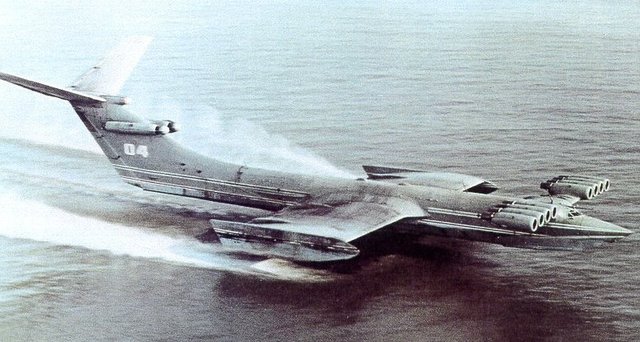
By ekranoplan I refer to all ground-effect (or “wing-in-ground”) vehicles, although technically this term is used to describe Soviet designs originating in 1960s (you can read more here: https://en.wikipedia.org/wiki/Ground-effect_vehicle). I agree with ekranoplan researcher Graham Taylor who prefers this term. “Ground-effect vehicle” and “wing-in-ground” are both too awkward for everyday use, and if you’re reading this page, you probably want this technology to become more widespread!
And there are indeed reasons for ekranoplans to become more common. Like most things in this world, this technology has pros and cons, but the pros are definitely worth exploring:
- higher efficiency due to lower lift-induced drag (don’t we love efficiency in today’s world?)
- less strict engine reliability requirements due to low flight altitude and relatively low speeds
- easier certification (may be classified as boats)
- fun! (an enhanced sense of speed resulting from low-altitude flight)
Looking for a niche
Ekranoplans have some inherent limitations, such as operation over water and reliance on calm weather. This, however, does not explain their near complete absence on the scene. Getting to the bottom of this would be a fascinating investigation, but in the scope of this idea we’ll focus on making a small step towards popularising ekranoplans.
For one reason or another, the majestic machines of the past didn’t find a way into today’s world, despite some attempts being made to commercialise ekranoplans within different niches in the transport sector. One area, however, has been overlooked: recreational vehicles. Making something small and cheap that many people can buy and operate privately could give this concept the much-needed popularity boost – on top of being a sound business opportunity in itself.
Recreational vehicles shouldn’t be underestimated. Jet skis, paragliders, hang gliders – they all enjoy worldwide popularity and serve as centres of thriving industries. Something as dangerous as motorcycles is ubiquitous, and something as infrastructure-intensive as sailplanes can still provide a practical hobby. The recreational ekranoplan I’m suggesting could be a great addition to this list.
Standing on the shoulders of giants
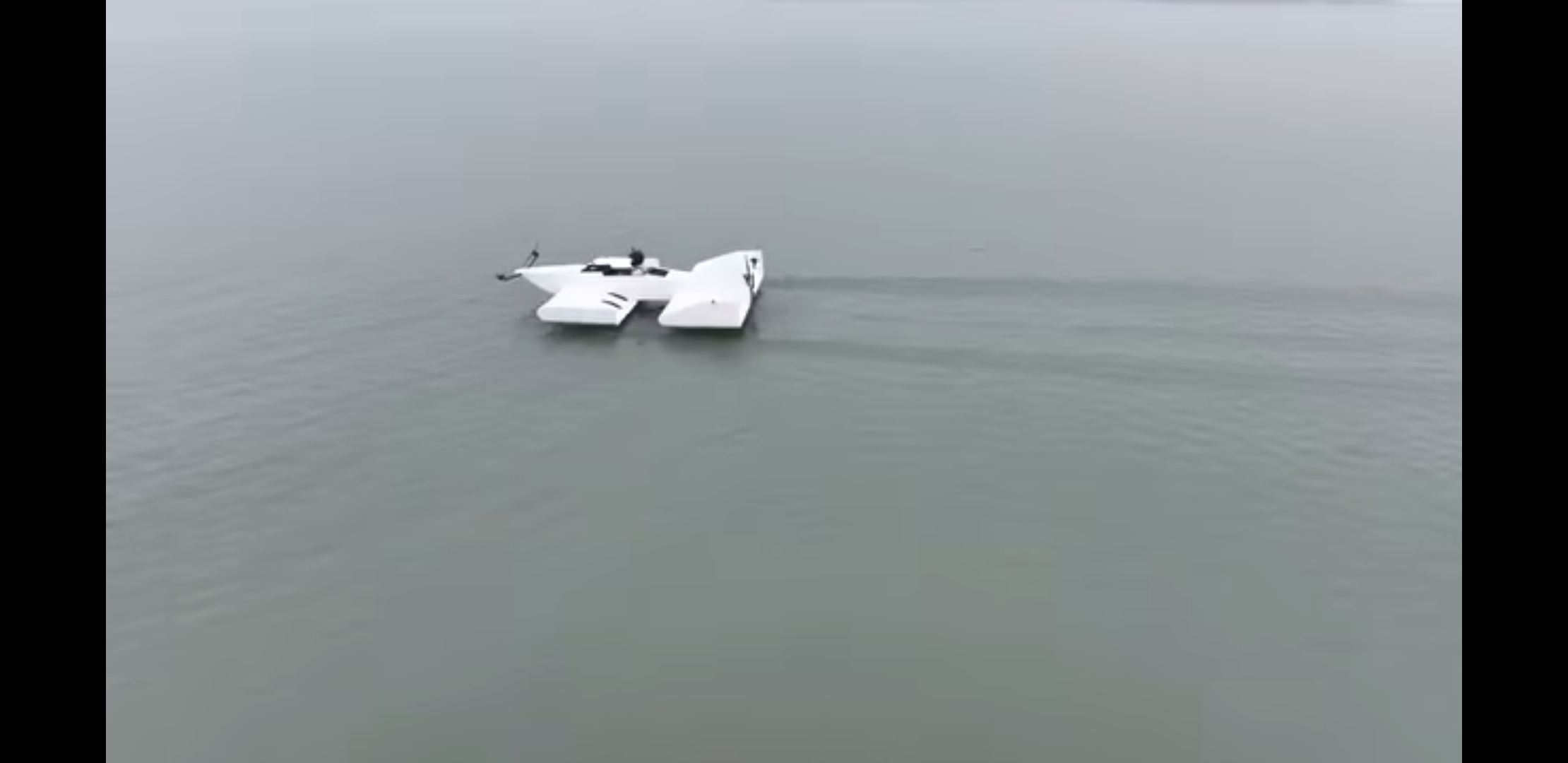
The proposed design draws inspiration from three existing projects, and combines their characteristics:
- Alexander Lippisch’s original X-112 and X-113
- thinkflight/rctestflight collaboration project
- MojieAirCrafting’s electric ekranoplans (first and second prototypes)


Power requirements
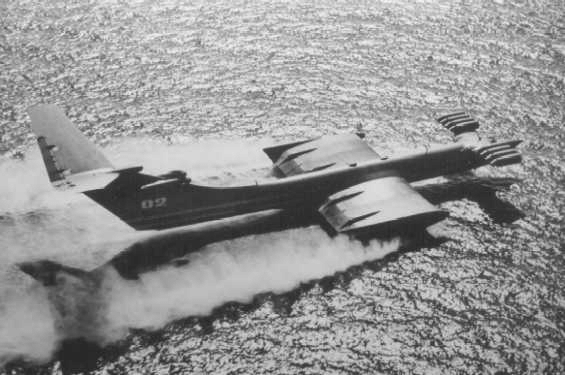
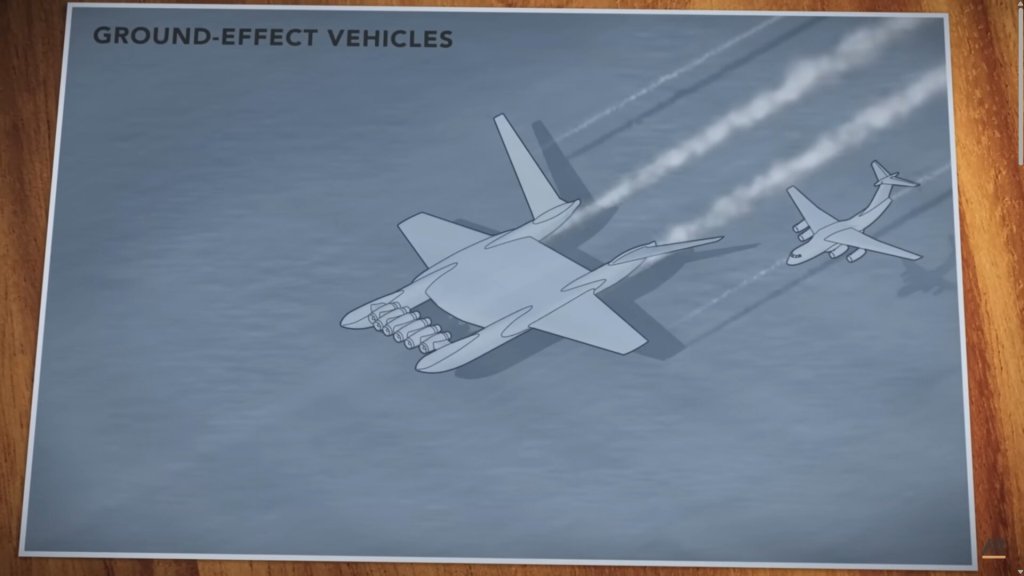
One of the main weaknesses of the ekranoplan, which is also its strength, is the fact that it needs a lot more power to take off than to keep cruising (or, if you look at it another way, a lot less power to cruise than to take off). Graham Taylor gives a figure of 5:1 for the ratio of takeoff/cruise power. This means the craft needs either to be equipped with engines with high peak power but also able to happily operate at lower power levels, or to carry extra engines to be used specifically for takeoff.
In the below illustration of the original Soviet KM ekranoplan, only the two tail-mounted engines provided power during cruise; the 8 engines on the nacelles at the front were required for liftoff.
Missed opportunity: hybrid propulsion
Traditional light ground-effect vehicles, such as the X-112, featured one internal combustion engine. The recent hobby builds, on the other hand, are powered purely by electric motors.
In my opinion, a combination of ICE and electric motors could be advantageous for a light ekranoplan: adding electric motors and batteries makes it possible to get away with having a low-powered cruise engine, which would be temporarily assisted by electric motors supplying the PAR thrust (located at the front and pushing air under the wings). Furthermore, electric motors could steer the craft by differential thrust and help maintain stable flight by adding power when needed.
Proposed design
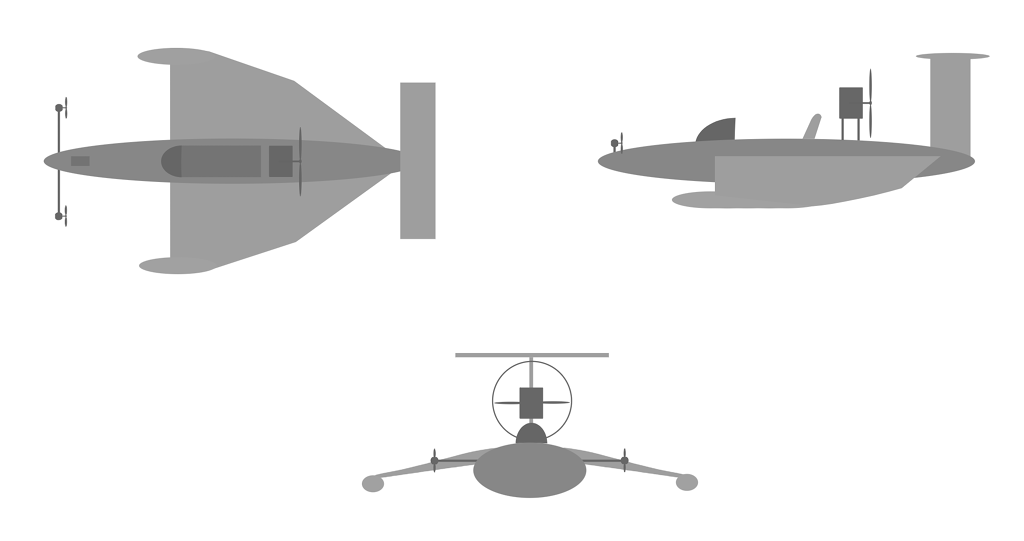
I propose building a light (1 or 2 seat) ekranoplan with hybrid propulsion.
Details

Hull
A lightweight hull similar to that made by thinkflight/rctestflight and MojieAirCrafting – or a repurposed kayak.
Wings
I suggest Lippisch-style reverse delta wing, as this configuration has proven highly stable in ground effect flight, but tandem wing setup may work just as well. There would be floats on the wingtips. Wings would be relatively thick and have a strong anhedral, as far as geometry allows (unlike the X-series prototypes, we probably don’t need to keep the fuselage out of the water – this will let us use smaller floats and will generally be easier to build, but it will limit the degree of anhedral we can have).
Cockpit
An open cockpit, nothing fancy. Needs safety features such as a kill switch that will cut the power if an occupant falls out.
Main engine
Rear/centre mounted paramotor setup in pusher configuration. It would be equipped with a safety cage that is standard on paragliders.
X-112 used a 25hp engine, and could reach speeds in excess of 100km/h – a good number for a recreational craft. Modern paramotors have power specs within this vicinity, are widely available, and can be purchased second-hand for more affordable prototyping.
Popular engines like Polini Thor or Vittorazi Moster (https://www.skymec.com/paramotor-engines) would be more than adequate.
A typical paramotor fuel tank can be used, mounted near the centre of gravity to avoid unbalancing the craft during flight.
Auxiliary engines
Drone-grade electric motors (2 or 4, depending on power), mounted on nacelles at the front. We can choose the same motors as those that were used by thinkflight/rctestflight and MojieAirCrafting – they have enough power to lift a one-person craft out of the water.
Motor orientation can be made adjustable to point the thrust slightly downwards to get more air under the wings (ability to change motor angle in flight may or may not be needed).
In addition to takeoff assistance, the motors can be kept running at low power during flight and be used for steering and for keeping stable pitch and altitude (e.g. if combined with a sonar – something that Daniel from rctestflight has done for a hydrofoil project). This could eliminate the need for control surfaces altogether.
Battery
A modest-sized battery can be used, because it is not expected to provide the bulk of power during cruise. Same batteries as those used by thinkflight/rctestflight and MojieAirCrafting’s first prototype would be a good start.
Battery placement can help balancing the craft (it can even be made movable to adjust the pitch).
Hybrid system
In the first prototype, the battery capacity can be roughly matched to the fuel tank capacity, based on anticipated usage scenarios. I.e., the battery cannot be recharged in flight, and we need to make sure that one source of power doesn’t run out much quicker than the other. Based on quick estimation, this is very feasible (a 10L fuel tank giving 2-3 hours of flight, and battery enduring 10-15 minutes of heavy use will together allow us to perform several liftoffs and some steering during flight).
In later prototypes, a true hybrid system can be developed, allowing the battery to be recharged from an alternator attached to the engine. This would add more complexity and weight, but is ultimately feasible.
Limitations
- Obviously, limited to very specific environments: large lakes and rivers (including frozen), very flat ground (e.g. dry lakebeds).
- Not the safest mode of transportation, but comparable to existing recreational vehicles, and can become safer with iteration.
- Single prop and extremely low altitude flight mean that torque could become a problem, causing the craft to roll and touch the water with a wingtip. This could be countered by adding control surfaces or compensating with electric motors.
- Marine operation could be problematic even in calm conditions because seawater, even in the form of spray, can damage the engine.
Possible use cases
- Privately operated ekranoplans transported on trailers like jet skis or dirt bikes and ridden for fun.
- Commuting in remote areas (like float planes in Canada).
- Rentals or thrill rides with instructors in suitable tourist locations.
- Air/water taxis (like the longtail boats used in Southeast Asia).
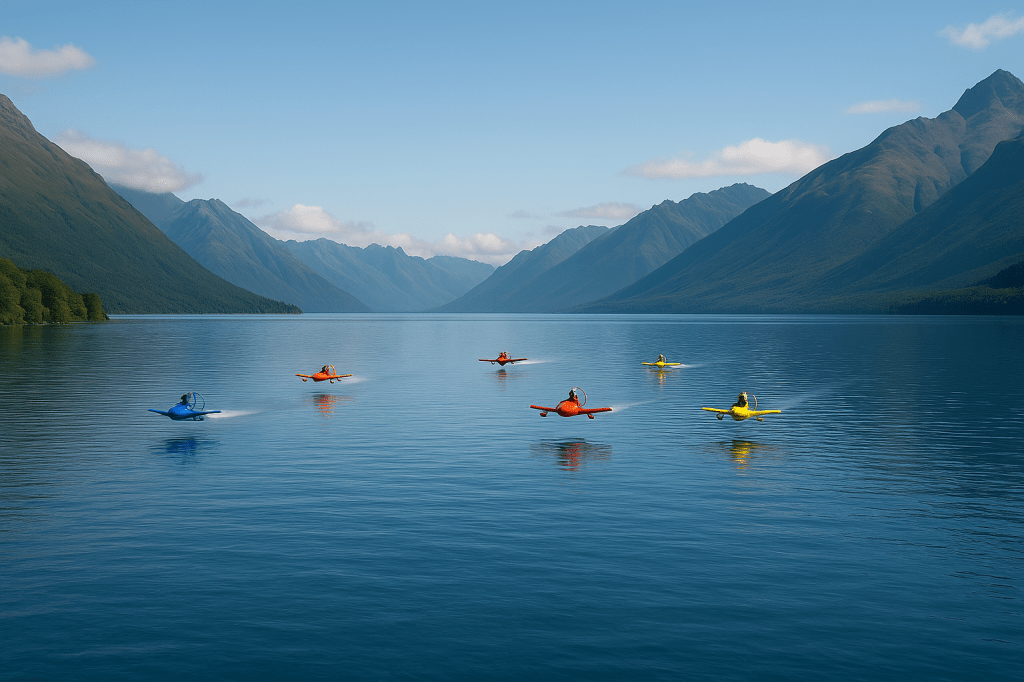
Opportunities
A lot! Recreational ekranoplans can grow more sophisticated, until they can finally break through into the transport sector, where much larger designs can be developed, like those envisioned by engineers and futurists in past decades.
Submitted by: Ilia Leikin
Looking for: advice, collaboration, someone to take over the project, company to build commercial version
Hashtags: #Ekranoplan #GroundEffect #WIG
Status: newly submitted
AI Evaluation
Summary:
This idea proposes a one- or two-seat recreational ekranoplan powered by a hybrid propulsion system: a paramotor engine for cruise and electric motors for assisted takeoff, steering, and stabilization. Drawing inspiration from historical and hobbyist builds, the design emphasizes accessibility, safety, and practical power distribution while seeking to revive public interest in ground-effect vehicles.
Strengths
- Feasibility:
The design leverages readily available off-the-shelf components and known technologies (e.g. paramotor engines, drone motors, kayak hulls), which makes a working prototype relatively achievable for skilled builders. - Niche Identification:
The idea correctly identifies recreational use as an overlooked market, contrasting with previous failed attempts to commercialize larger or utilitarian ekranoplans. Recreational adoption could help normalize the technology and build momentum. - Engineering Insight:
The 5:1 power-to-cruise ratio is a key challenge of ground-effect flight, and the hybrid system addresses this intelligently. Using electric motors only during takeoff and maneuvering keeps complexity and weight manageable. - Precedents and Citations:
The proposal is well-informed and clearly references relevant historical and contemporary examples, which helps establish credibility and context for the idea. - Modularity and Scalability:
The modular nature of the propulsion and control systems (ICE + electric) opens paths to iterative improvement, making it suitable for staged development from hobby build to potential small-scale commercial use.
Risks and Limitations
- Safety Concerns:
As with many ultralight vehicles, safety risks are nontrivial. Low-altitude flight near water, torque-induced roll, and potential occupant ejection pose design and regulatory challenges. - Environmental Constraints:
The craft’s dependence on calm, flat surfaces and benign weather limits usability to specific geographic regions and seasons. - Power Management Complexity:
Even with hybrid advantages, coordinating throttle response, torque effects, and flight stabilization will require careful tuning and potentially introduce learning curves or expensive control systems. - Market Size Uncertainty:
While recreational vehicles often carve out their own markets, it’s unclear how large the audience would be for a niche machine requiring both open water and pilot skill.
Opportunities
- Tourism and Remote Mobility:
In regions with appropriate geography (e.g. lake districts, island chains), this could become a novel transport or entertainment offering, either owned or rented. - Maker Community Adoption:
Enthusiasts from FPV, ultralight, or maker communities could advance the design through open-source sharing, collaborative iterations, and competitions. - Pathway to Larger Innovation:
A well-executed small-scale platform could lead to public re-evaluation of ground-effect transport’s broader viability, with potential in cargo, rescue, or regional travel markets.
Overall Assessment:
This idea is a well-considered, inventive, and feasible proposal that addresses a long-standing underutilized aviation niche with a fresh, modern approach. It combines strong technical reasoning with practical implementation pathways and appeals to early adopters in the recreational and maker spaces. While challenges remain—particularly in safety, regulation, and limited terrain—the concept is an excellent candidate for prototyping and further experimentation.

One thought on “Ultralight hybrid-powered ekranoplan”