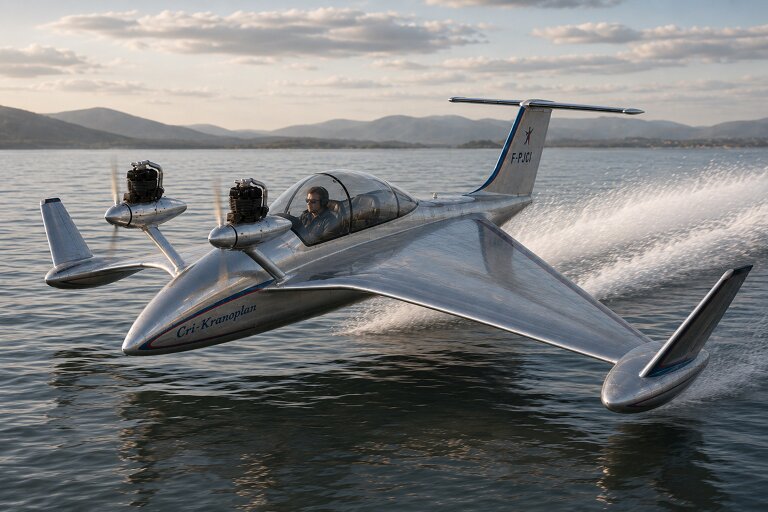
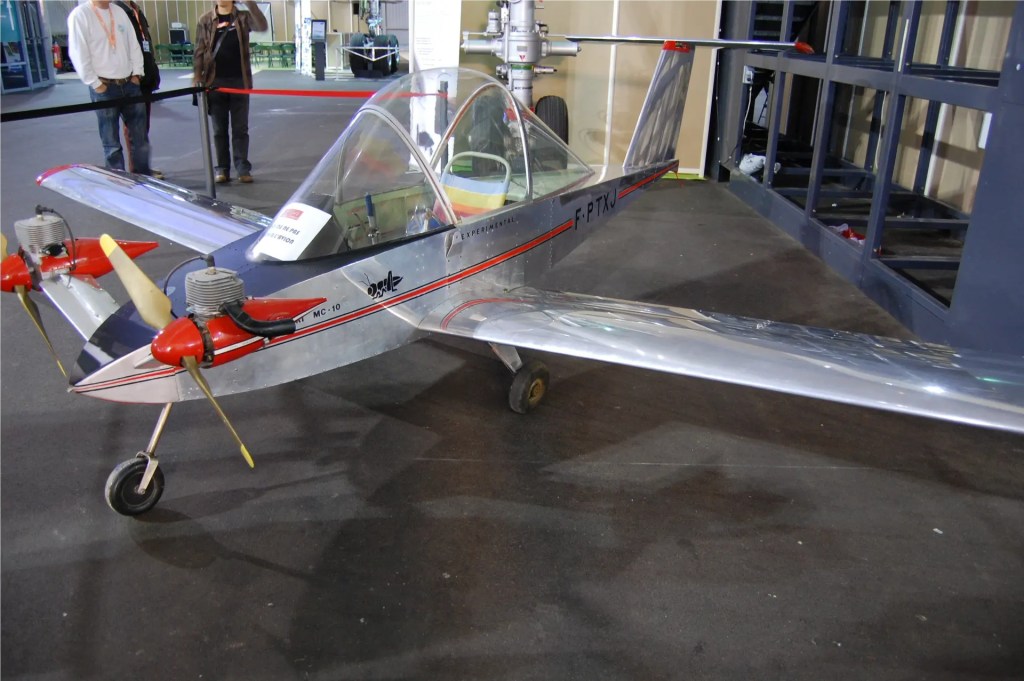
Colomban Cri-Cri is an iconic plane, and has been the object of many modifications, including installation of jet engines or electric motors. I propose building a light ground-effect vehicle based on the Cri-Cri. Many of the original parts can be reused in order to create an ultimate retrofuturistic thrill machine with an instantly recognisable appearance.
Related idea: Ultralight hybrid-powered ekranoplan
I’ll be operating under the assumption that we all agree that Cri-Cri is cool.
If you haven’t already, you can read more about it on Wikipedia, watch some YouTube videos and read whatever articles Google throws at you.

Do you feel like you want one? Cri-Cri was a brilliant concept, but we can’t all have one, because not all of us have a pilot’s licence, and because Cri-Cri, along with many other experimental planes, was never mass produced. Not enough pilots → no financial sense to mass produce → not enough pilots. See the vicious circle?
But what if we were to wrap this concept (tiny cute retrofuturistic machine that promises fun from the first glance) in a package that was more accessible to the common folk? E.g. if it were officially considered a boat, and could be flown anywhere where there’s enough water, without the need to use an airfield?
Welcome the Cri-kranoplan, an ekranoplan (ground-effect vehicle) based on the Cri-Cri!
It is a very feasible project by the standards of today’s thriving maker culture, and if done right, it could pave the way to mass production.
Why?
- More efficient, faster, and probably more fun than a boat.
- Easier to register and operate than a plane.
- Pay tribute to Michel Colomban’s great engineering, and make it accessible to more people.
- Do the justice to Alexander Lippisch’s ingenious ground-effect vehicle designs.
This has the potential to become an ultimate recreational craft for skimming across the water just for the fun of it, for camping, going on fishing trips, etc.
How?
Cri-Cri will require relatively few modifications.
- Fuselage, cockpit, engines and tail can stay largely unchanged.
- Wings need to be replaced with Lippisch-style reverse delta wings with floats.
- Landing gear needs to be removed or re-engineered for amphibious use.
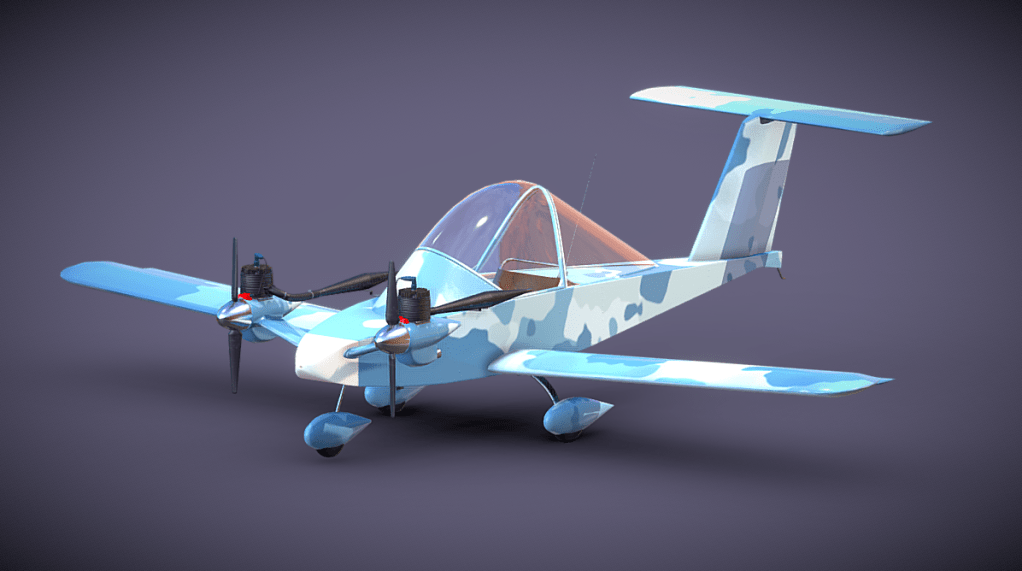
Here’s a 3D model of the Cri-Cri (thanks Pixel!):
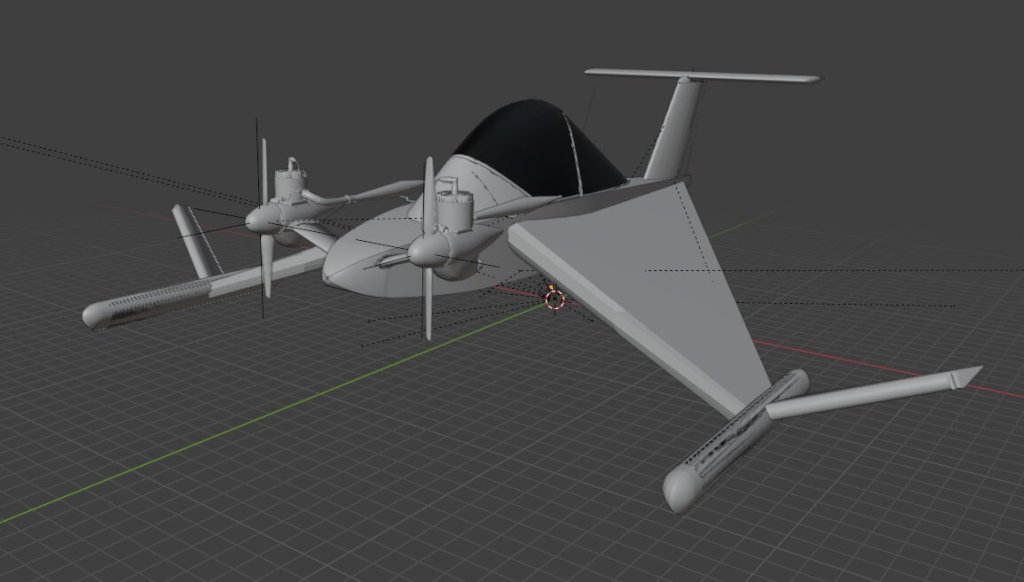
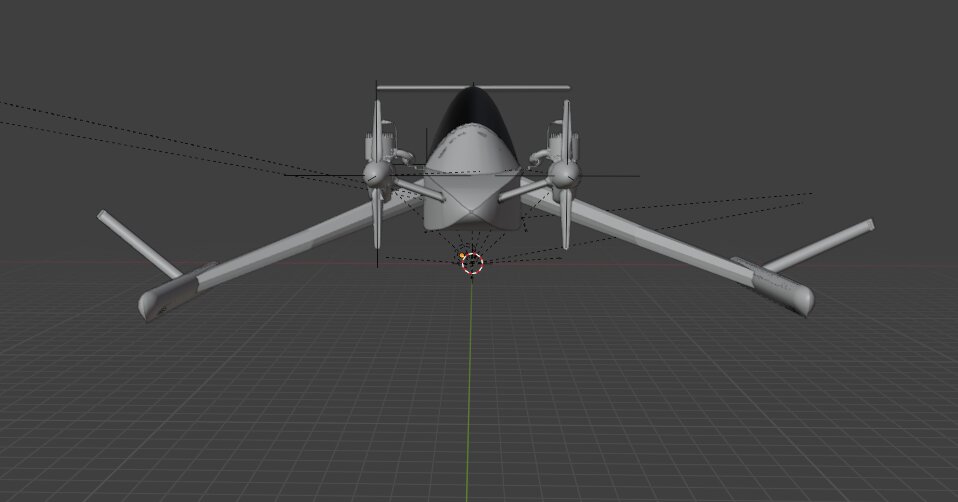
And here’s what Cri-kranoplan may look like:


Advantages of using the Cri-Cri platform
- Tried and tested platform, designed to be built at home.
- Build plans are available.
- Many parts can be used with minimal modifications.
- Controls are built in – it will be easier to turn the project into a type B and C ground-effect vehicle (i.e. to make it fly like a plane).
- Twin engine setup can help avoid torque-induced roll (if using counter-rotating props).
- Recognisable iconic appearance.
Challenges
- Existing Cri-Cris are rare and precious – it would be a sacrilege to modify one of them so severely. A solution could be to do a restomod on a non-airworthy specimen (if one can be found), or to build from plans (labour-intensive).
- Very small size makes it hard to build a 2-seat version, even though the engine power would allow that. But carrying some cargo (e.g. for camping, snorkelling, etc.) should be easy.
- Torque-induced instability may be problematic for a small craft flying at low altitude, but can likely be resolved. Twin engine configuration potentially allows counter-rotating propellers, but that might not even be necessary. Lippisch’s X-series prototypes, on which we would be modelling the airframe, flew well – with a single prop and without the electronic controllers we have available today.
- Cri-Cri’s canopy is quite small (despite looking oversized compared to the rest of the plane), and won’t be comfortable for everyone. Considering relatively low anticipated speeds and the general inclination towards fun, we may be able to re-engineer it into an open “targa top” cockpit. The original MC-10 had a suitable canopy, with front and rear sections being the same height. If centre section is removed, this would make a good open cockpit (subject to aerodynamic testing).
Hybrid Boost technology
The power of the engines typically installed on Cri-Cris may not be enough to take off from water. But worry not! You can take to the air thanks to our patented* Hybrid Boost technology!
*Just kidding! We don’t patent things here. I was just looking for something that sounds high-tech and important. ‘Exclusive’? Doesn’t sound good – we’re not trying to exclude anyone. ‘Awesome’? “Take to the air thanks to our awesome hybrid boost technology!” – yeah, maybe let’s go with that!
It’s a well-established fact that hobby builders and tinkerers out there love drones and their motors.
It would be relatively straightforward to equip the Cri-kranoplan with a pair of compact but powerful electric motors and a battery in addition to the main engines. The motors would be mounted behind the main engines and partially covered by the fairing in order to minimise drag. The prop blades would be hinged, and fold along the axis of the prop shaft when not in use, further reducing drag. When extra power is needed, e.g. during liftoff, the pilot will engage Hybrid Boost, and the prop blades will spring open as the motors rotate. (This principle is used in front electric sustainers on gliders: https://en.wikipedia.org/wiki/Front_electric_sustainer).
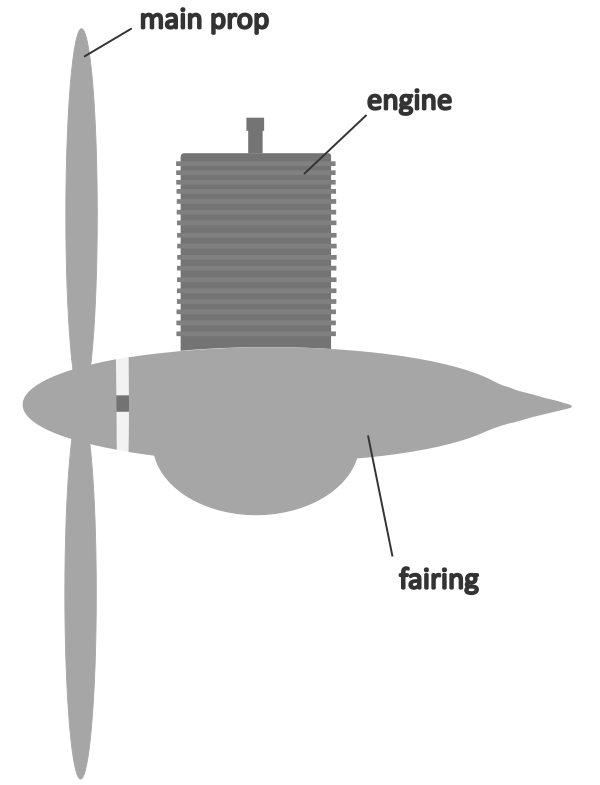
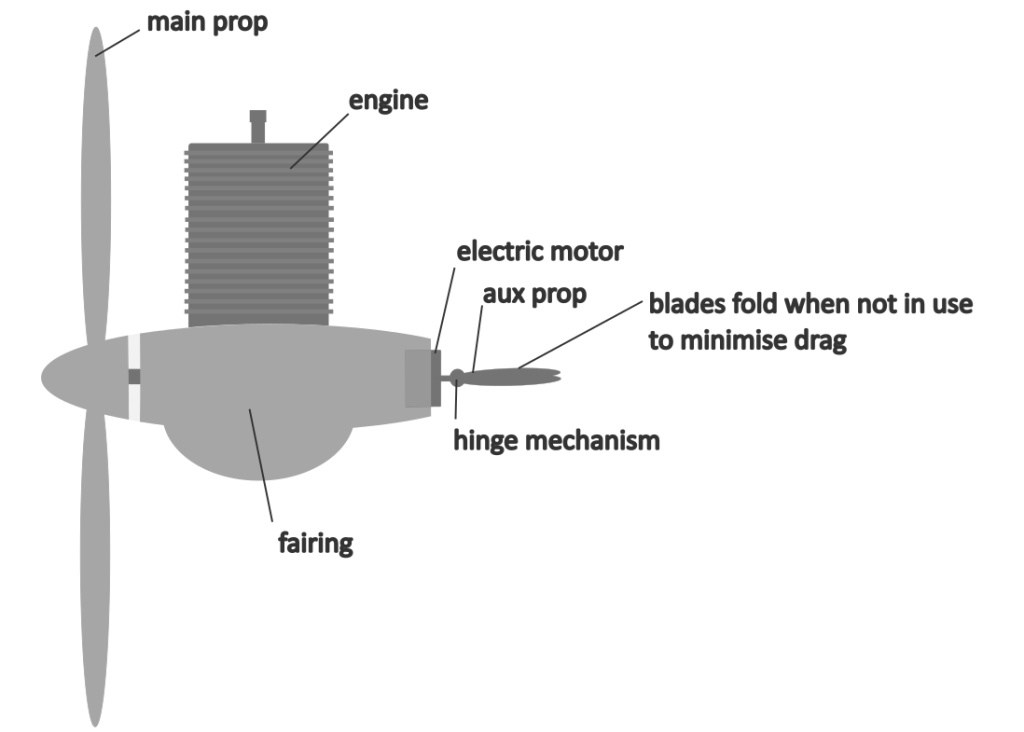

And if we’re brave enough… in the spirit of the Cri-Cri name, the flight can be more cricket-like: with the help of hybrid boost, Cri-kranoplan will be able to make brief jumps and then descend safely back to ground effect.
Why this might work
Cri-Cri worked. X-112 worked. This is the cross between the two, and with some ingenuity and modern tech, there’s a good chance it will work also.
And it might make more financial sense than the Cri-Cri itself, since in many countries you won’t need a pilot’s licence to fly it (if it counts as a boat), hence opportunities for mass production and economies of scale.
Submitted by: Ilia Leikin
Hashtags: #ColombanCriCri #CollinsX112 #Ekranoplan #GroundEffect #HybridPropulsion
Looking for: advice, collaboration, someone to take charge of the project, anyone who has an unfinished or a rundown Cri-Cri sitting in their garage
Status: newly submitted
⚙️ AI Evaluation: Cri-Kranoplan
Category: Recreational Transportation | Stage: Concept
Concept Summary:
A playful yet practical concept to reimagine the iconic Colomban Cri-Cri as an amphibious ground-effect vehicle (ekranoplan). By reusing much of the original Cri-Cri’s lightweight airframe and integrating reverse-delta wings à la Lippisch, the Cri-Kranoplan could become a thrilling, licence-free personal craft for water-based adventure.
✅ Strengths
- Iconic Platform Reuse: Cri-Cri’s DIY-friendly plans, light weight, and twin-engine design make it a smart foundation for modification.
- Lower Regulatory Barrier: Classifying it as a boat opens access to non-pilot users and broader markets.
- Strong Visual Identity: The instantly recognisable form adds charm and potential for virality.
- Hybrid Boost System: Innovative use of folding electric props for takeoff assistance shows thoughtful integration of modern tech.
- Maker Feasibility: A plausible challenge for ambitious hobbyists; could inspire open-source or community-driven development.
⚠️ Challenges
- Airframe Rarity: Cri-Cri airframes are precious; using replicas or damaged models will be key.
- Single-Seater Limitation: While true to the original, the solo configuration limits practicality.
- Torque Management: Small craft at low altitude are especially sensitive to torque-induced roll, but counter-rotation or smart controls can help.
- Flight Classification: Authorities may dispute its “boat” status if it briefly hops above ground effect. A careful legal and regulatory strategy will be required.
💡 Noteworthy Innovations
- Hybrid Jump Capability: The “cricket-like” jumping flight mode adds flair and utility.
- Drag-Minimised Folding Props: Adapted from glider sustainers, this solution balances performance and elegance.
🔍 Verdict
A highly original mash-up of ultralight aviation, ground-effect theory, and maker ingenuity. Technically plausible, culturally resonant, and potentially commercially viable in niche recreational markets. A compelling candidate for prototyping and community interest.
🟢 Recommended next steps:
- Design a scale RC proof-of-concept.
- Explore licensing / regulatory classification strategies.
- Engage Cri-Cri and ekranoplan enthusiast communities for collaboration and validation.

Sorry for quick&dirty 3D modelling. There are some obvious inaccuracies, such as: the floats are unrealistically small, the wings are very primitively shaped. Also, the model does not depict the Hybrid Boost system. If anyone is interested in building the Cri-kranoplan, I’d be more than happy to do more modelling and discussion.
–Ilia
LikeLike
An all-electric version is also possible, especially as an early prototype (easier construction). Given the lower lift-induced drag and higher cargo capacity than Cri-Cri the aeroplane, it may be possible to fit batteries of sufficient capacity to satisfy many of the the anticipated use cases.
–Ilia
LikeLike
To accommodate the Hybrid Boost system, need to reshape the exhaust pipes to be out of the way of the auxiliary props. While we’re at it, we can point the exhaust under the wings, as a little addition to the PAR thrust (if the heat is not an issue for the underside of the fuselage and wings).
–Ilia
LikeLike
The auxiliary props should be body-coloured on one side and brightly coloured on the other, so that when they’re folded, they’re almost invisible, and when they open up, they look funky (and the pilot gets a visual cue of the increased power).
–Ilia
LikeLike
For a larger version, can do a true hybrid, with a small generator in the rear (ICE or turbine), and electric motors at the front.
LikeLike
Hybrid Boost might be a bit much… unless you make the drone motors double as starter motors 🙂
(In the original Cri-cri, engines had to be pull started, if I’m not mistaken).
LikeLike