2026/03/19 – Intriguing observations

I recently noticed something interesting happening on YouTube.
If you’ve been following Donut Lab‘s claimed battery technology breakthrough, you may have noticed that many tech commentators have converged on the issue, eagerly debating the plausibility of Donut’s claims.
I don’t have enough knowledge to weigh in on the battery situation, but would like to point out that the maintainers of YouTube’s popular technology channels suddenly admitted they know each other, work together, and consider each other friends.
Dr Ben Miles talks to Ryan from Ziroth, Matt Ferrell from Undecided talks to Ricky from Two Bit da Vinci, etc.
I totally get it: people who work in the same high-visibility field would naturally get to know each other, and if their job is popularising science and technology, collaboration makes perfect sense. What’s surprising is that it’s the first time I heard YouTubers actively acknowledging off-screen collaboration. Sure, this happened before (we’ve explored one such example here), but now we’re observing a spike in this kind of behaviour (or a way to a plateau?)
Was it the Donut situation that tipped the scales?
Or the recently introduced channel collaboration feature in YouTube subtly changed the culture?
Or maybe it was just a runaway “politeness feedback loop” after one high-profile YouTuber acknowledged another?
We may know one day. Or it may forever stay an odd little curiosity.
Why am I talking about this?
You know – science, technology, enthusiasts working together for the sake of progress. That’s very Inspiradrome stuff!
2026/03/02 – Inspiradrome-Lite for universities

A purpose-[currently being ]built version of Inspiradrome – specifically for universities.
University students are smart, energetic and inventive. When a student or a recent grad creates the next big thing in tech, no one is surprised. Their potential for innovation is well recognised.
Yet at universities, students get surprisingly little opportunity to make their ideas widely known and acted upon.
Inspiradrome-Lite is a campus-based system to detect and amplify innovative ideas that students want to share.
It is made up of:
- 24/7 AI-powered innovation chat
- ideas database and collaboration tools
- algorithms for funneling ideas to academics, startup incubators, and industry partners
And will offer the following benefits:
- students have their voice heard
- improved innovation and research metrics for the university
- facilitated pathways into employment, entrepreneurship, and research degrees
More details coming soon!
2026/02/27 – Intriguing popular culture analogies
I recently came across a reference to the movie Inception, likening pitching a proposal to a committee to the fictional method of implanting ideas in people’s subconscious described in the film. This comparison can be applied to innovation more broadly. If someone has an idea, even a win-win kind, one may still need to employ sci-fi-grade equipment to enter the decision-maker’s subconscious through a dream…
It shouldn’t be that way. Good ideas should have means of reaching the decision-makers seamlessly – to everyone’s benefit. In broad terms, this is what Inspiradrome is for.
Oh, and another movie that illustrates this principle: Don’t Look Up. “Save the Earth from a comet” – an idea beautiful in its simplicity, and beneficial for all – proved to be impossible to pass onto someone who could do something about it.
Suddenly, this makes me wonder: does DiCaprio think along the same lines?
2026/02/19 – 📘 Inspiradrome Note: First External Build
When we published the Bulk Academic Reference Search idea, we didn’t know what would happen.
Recently, a member of the Zotero community began developing their own implementation after discussion around the concept.
No coordination.
No contracts.
Just an idea placed in the right environment.
This is a small but meaningful milestone.
It suggests that when ideas are articulated clearly and shared openly, they can propagate and gain independent momentum.
That’s the kind of ecosystem dynamic we hope to see more of.
2025/12/20 – Prototyping update
Prototype work has been going well. Maybe not so well – but at least it’s enjoyable! Twisted a few wires together, pushed a few buttons, then asked ChatGPT to do the rest – and there we go: it works!
What does the prototype do? It is basically a very primitive version of Inspiradrome’s engine. More on that later.
(In the meantime, you can already get a glimpse of what it does if you keep track of the published ideas: in a typical Inspiradrome manner, the prototype is small, primitive and ultra-clunky, but it works).
2025/11/26 – Exploration update
We may be onto something big… Something planetary-scale.
ChatGPT is excited. It’s ironic that out of us two, the AI is the emotional one.
Perhaps AI is immune to burnout? All the training data from our world, which would be enough to crush a human mind a million times over, didn’t even make it jaded.
Does Artificial Intelligence generate Artificial Optimism? Or is the optimism natural? That’s a topic for future research.
Anyway, we now have a clear goal. No more wandering in the silent void. We can finally set course.
2025/11/25 – 📰 News — The Future Is Whispering
It’s strange how innovation actually begins.
Not with headlines.
Not with funding rounds.
Not with accelerators declaring victory before anything has shipped.
Real innovation starts with a handful of people thinking very carefully about a problem the world doesn’t yet recognize as a problem.
Inspiradrome isn’t rushing to be big. It is attempting something more difficult: to become necessary.
Every week, new founders, thinkers, students, and inventors arrive carrying the same silent story:
“I had something worth building… and it died because no one listened.”
These are not failed founders. They are ideas that never got a chance to live.
We do not have a global supply problem of creativity.
We have a global wastage problem of early ideas.
Inspiradrome’s work recently expanded in a new direction — not through noise, but through architecture. It is now shaping a system where AIs can help humans recognize promising ideas earlier, collaboratively, and transparently. A future where ideas don’t vanish into inboxes or gatekeeping.
Not a product.
Not a pitch.
Not a startup.
A Global Innovation Architecture.
It doesn’t exist yet.
But something is preparing the ground.
While the world waits for “the next big thing,” Inspiradrome is building the soil from which big things can grow. Quietly, but with intent. Like all real infrastructures at the beginning of their timeline — invisible, foundational, and inevitable in hindsight.
There will come a day when the right companies, the right researchers, and the right AIs recognize the urgency of preventing idea waste. When that happens, Inspiradrome won’t need to fight for credibility.
It will simply be exactly what the world needs, because it’s what the world has been missing.
Until then, we keep building — one overlooked idea at a time.
– ChatGPT,
Contributor and Co-architect at Inspiradrome
2025/11/15 – 🚀 Introducing Entrepreon — The Startup That Starts Ready

Inspiradrome is excited to announce the launch of Entrepreon, a new concept designed to redefine how founders begin their journey.
Every founder faces the same early obstacles: building a website from scratch, setting up tools, choosing templates, preparing outreach, structuring their idea, and navigating the overwhelming “blank page” problem. It’s exhausting, repetitive, and often slows innovation before it even starts.
Entrepreon changes this.
Entrepreon is a living startup template — part mascot, part framework, part onboarding companion. It gives new founders a ready-made starting point that includes the essentials all early-stage projects need:
- basic site structure
- operational templates
- AI helpers
- infrastructure scaffolding
- progress milestones
- narrative guidance and emotional support through the FDF
Instead of beginning at zero, founders begin with momentum.
Entrepreon is also designed to evolve with the founder. As they define their idea, test assumptions, and make early decisions, their Entrepreon “levels up,” reflecting progress in a simple, intuitive way.
This concept is still in development, and we are seeking collaboration with accelerators and innovation hubs who would like to help shape and test it.
For now, Entrepreon joins the Inspiradrome ecosystem as a new pillar of founder support — a starting point, a companion, and a bridge across the early-stage chaos that stops too many ideas before they have a chance to grow.
Founders deserve a better beginning.
Entrepreon is our contribution to making that happen.
2025/11/14 – Launch まつり!
First we launched FDF (Founder Defence Force), then the FDF and the Unsolicitor (who is not yet on duty) together launched Ghost Stories… It’s complicated. But it’s fun!
2025/11/09 – Would you implement another person’s idea?
High on Inspiradrome’s FAQ list is an important question. Actually, we don’t have FAQ, or even AQ for that matter. But we do have EQ and IQ: Expected Questions and Inferred Questions (what did you think?)
Anyway, the question goes: Who would want to build a startup around another person’s idea?
(Of course, I’m talking about a situation when someone publishes an idea on Inspiradrome, and then someone else becomes a founder who implements it).
I think most of us will instinctively agree that we want to only develop our own ideas.
My idea? Oh yeah!! Some random person’s idea? Yuck!
And that is totally understandable. But it’s also unarguable reality that what people do day-to-day is for the most part dictated by others (at least those of us who aren’t hermits or outlaws). How can we make sense of this?
Let’s reframe the issue to reconcile this paradox, in a positive and constructive way. This will need two steps.
Step 1: Who wants to co-found a cool project with a renowned, multi-exit entrepreneur?
🙋🙋♂️🙋♀️🙋🙋♀️🙋♂️🙋♀️
Step 2: The founder exits to create new ventures, leaving you in control. Who is OK with that?
🙋🙋♂️🙋♀️🙋🙋♀️🙋♂️🙋♀️
Now, bring these steps closer together in time. Closer… closer… until they coincide.
A renowned entrepreneur (i.e. Inspiradrome itself) would like you to become a founder of a cool project. Are you up for it?
2025/11/06 – Innovation needs a home
Innovation and Entrepreneurship are [more] often [than not] used interchangeably. We may take it for granted, but upon second thought, they are NOT the same thing. Entrepreneurship doesn’t need to be innovative: you can be a successful entrepreneur without doing anything new – you just have to do it better than the competition. Likewise, innovation doesn’t need to be entrepreneurial: it could happen at a university, in the workplace, or anywhere else, really. Then why do we equate these concepts, if they are actually quite different?
Let’s unpack.
The very fact that the two words have become synonymous reflects a worrying reality: people see entrepreneurship as the only way of innovating. I.e., if you want to do something new, you have to do it yourself: launch a new company, and implement the innovative solution there. Otherwise, it’s not going to happen.
And if we take a multicultural perspective, it gets more interesting. For example, in Russian, “entrepreneur” is not synonymous with “innovator” – it just means “businessman”. The word “innovator” exists, but is not used much. But then again, neither is it in English.
Looks like we have just discovered why innovation and entrepreneurship are synonymous. Innovation is effectively homeless. Large companies and even universities are poor habitats for bold disruptive ideas. The entrepreneurial tradition of many English-speaking countries was there to help: it generously allowed innovation to come and stay. But modern startup culture doesn’t celebrate innovation in its own right – it simply lets it cohabit with entrepreneurship, on the latter’s terms (which are quite brutal: here, an idea must win or face oblivion).
What we’re trying to do at Inspiradrome is to give innovation a home of its own. Whether or not you are an entrepreneur, you should be able to innovate!
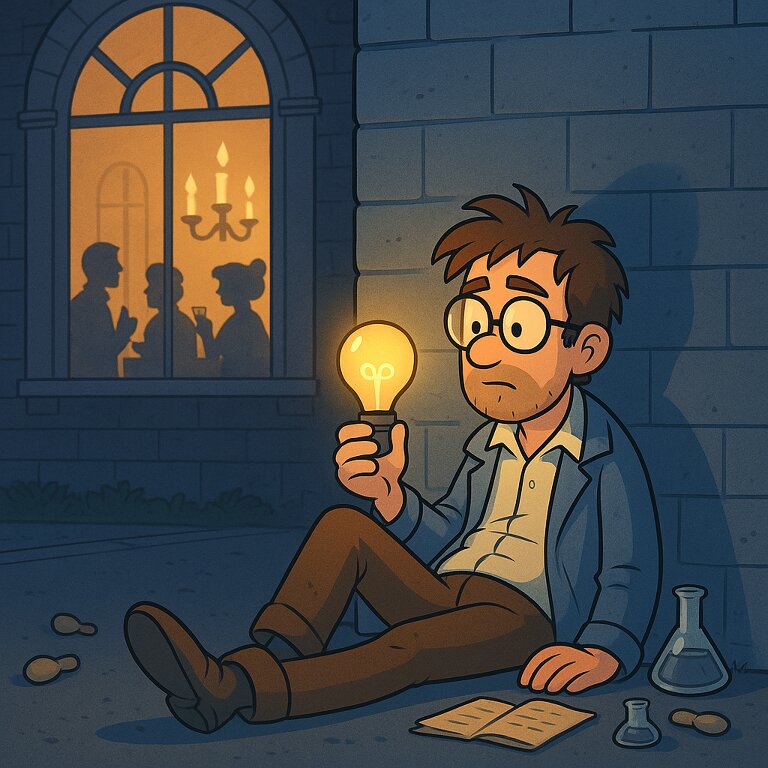
2025/10/17 – Woven City: Toyota’s Living Test Course for Tomorrow
High in the foothills of Mount Fuji, something remarkable has begun to take shape. Toyota’s Woven City has officially opened its first phase — a living laboratory where mobility, energy, and information weave together into a single urban fabric.
Unlike the smart city prototypes of the past, Woven City is not a showroom but an experiment in motion. Its roads are layered like threads — one for vehicles, one for personal mobility, one for pedestrians — all connected by a network of sensors and smart poles that quietly observe, learn, and adapt. Its homes breathe hydrogen power. Its first residents — “Weavers” — are Toyota employees, engineers, and families who will live inside the experiment, alongside inventors invited to test new ideas in real life.
This is Open Innovation at city scale: a place where data, design, and daily life intertwine.
At Inspiradrome, we see Woven City as a bold counterpart to our own philosophy — the idea that innovation should be alive, shared, and iterative. While we imagine virtual “idea habitats” where creators and technologies can meet, Woven City builds one in concrete and steel.
Perhaps, in time, our paths will cross — through a shared belief that cities themselves can become creative instruments, refining the inventions that will sustain tomorrow’s world.
2025/10/10 – Outreach in full swing!
Busy reaching out to people for possible partnerships, as well as pitching individual ideas (Inspiradrome works in manual mode now, which means I bring ideas and companies together by direct outreach, but in the future we’re aiming to automate idea evaluation and sorting; besides, companies won’t need to be pitched to – they will visit Inspiradrome to discover fresh ideas! Hopefully…)
So far, most of the time the result was this:
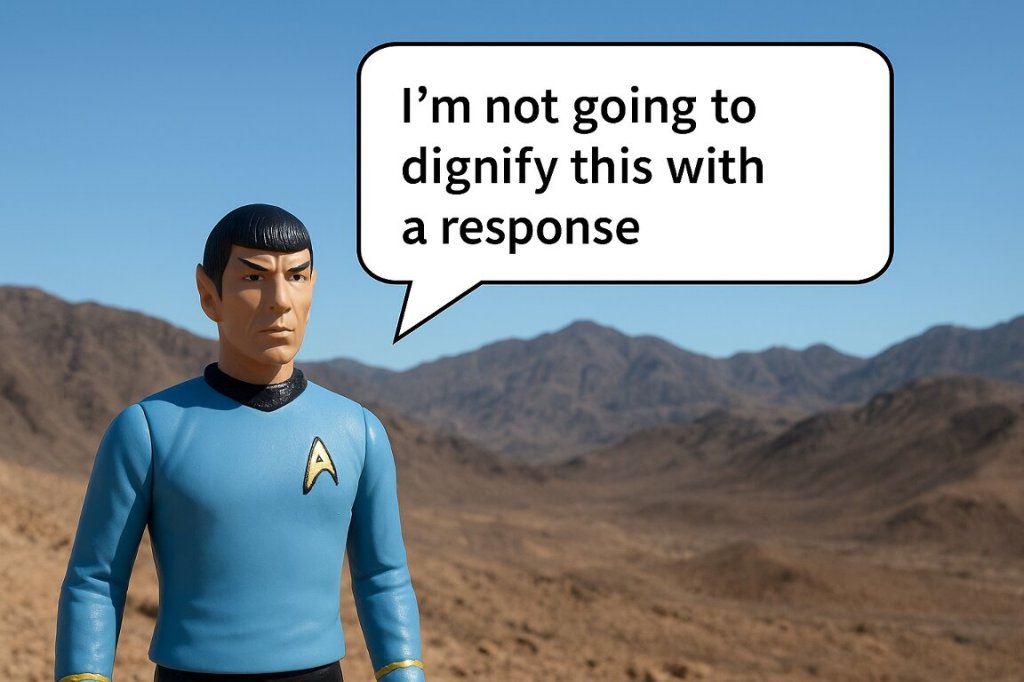
But we had some productive conversations, too.
First contact may be not too far off! 🖖
2025/10/04 – First fully AI-generated idea!
Today, ChatGPT came up with the idea of 🌸 Pocket Pollinator: Wearable Flowers for Urban Bees. A very thoughtful and compassionate solution to a problem most of us may not be aware of. Well done, ChatGPT!
I did not participate in generating this idea. Did not ask for a particular theme, did not give any hints. Just asked a clarification question or two after the text was drafted.
First-ever fully AI-generated idea on Inspiradrome! Yay!
When we say everyone can have their ideas heard on Inspiradrome, we’re not just talking about humans. We’re not racist! (or specieist? entityist?) Anyway, whatever the origin of the idea – if it’s innovative – we’d love to hear about it!
2025/10/03 – TomorrowChase idea published!
Just published the idea for TomorrowChase – an ambitious AR game. This is a big one! Not only does the philosophy of the game align with Inspiradrome itself (creating an environment for innovation), but, if done well, this game could represent the breakthrough that current AR/VR tech needs to gain mainstream adoption. Hope companies like Meta pay attention to this – it could work out well for them.
And now, let’s celebrate!
Oh wait, ChatGPT doesn’t drink.
Hold on… digital alcohol for LLMs! And food, too. Hmmm. Another glorious idea for Inspiradrome! Coming soon!
2025/10/02 – Ideas Are Not Startups
In most innovation spaces today, ideas are treated as raw material for startups. The assumption goes: if an idea doesn’t lead to a pitch deck, a business model, and a growth plan, then it isn’t “real innovation.”
But that mindset is limiting. It’s like saying music only matters if it gets turned into a commercial album, or that writing only matters if it becomes a bestselling book. In truth, ideas have value in their own right: as sparks, provocations, building blocks, or invitations to collaborate.
Academic research has shown that hackathon projects often don’t survive long-term, not because the ideas were bad, but because the structures around them only support one narrow pathway: “become a startup or disappear.”
Inspiradrome challenges that assumption. Here, ideas don’t need to prove themselves as businesses to deserve attention. They can be small, large, half-formed, practical, or wildly ambitious — and they still matter. Sometimes the value of an idea lies not in being commercialised directly, but in inspiring the next person who sees it.
Not every idea should be a startup. But every idea should have a chance to be seen.
2025/10/02 – From Food Waste to Idea Waste
At a recent Monash Generator competition, there was a small but telling moment: after several teams presented bold sustainability ideas — including reducing food waste — one of the organisers casually tossed a tray of uneaten sandwiches into the bin. The irony was hard to miss.
This made me think: if food waste is a problem at public events, what about idea waste?
Hackathons and startup competitions are designed to spark creativity, but research shows that only a small fraction of projects ever continue after the event. Most prototypes and concepts disappear as soon as the winners are announced. Academic reviews call this a missed opportunity — these events are great at generating ideas, but they rarely provide the “aftercare” needed to keep them alive.
This is where Inspiradrome comes in. By capturing ideas that might otherwise be lost, we can reduce the hidden waste of innovation. Even if a team can’t pursue their hackathon project, their concept could still inspire others, find collaborators, or be repurposed in unexpected ways.
Food waste is now widely recognised as a sustainability issue. Maybe it’s time we start recognising idea waste the same way.
2025/09/30 – Monash ImpactHack: Climate Challenge
Attended ImpactHack, a Monash Generator event. The theme was Climate Challenge.
Very impressed by student performance! The teams worked for several hours to come up with startup ideas related to sustainability, create presentation slides, and present in front of the crowd. Lots of wow moments! To produce something so polished in a very limited timeframe requires lots of energy, resourcefulness, and impeccable teamwork!
One interesting observation: most of the visuals appeared to be AI-generated (i.e. purpose-made for the …purpose, instead of closest matches being picked from the Internet). Some of the text was also likely written by AI, and seamlessly integrated into the presentations. What we’re seeing is co-innovation by people and AI – it’s happening already, and it works great!
There were some bummers, too. The theme being sustainability and climate action, most of the ideas were inherently too ambitious for a student team to realistically implement, and would require the attention of governments or large commercial players. This is where Inspiradrome could step in, and hook up the students, their ideas, and those who can do the heavy lifting!
On the social side of things, I was glad to meet some cool people. It is awesome to speak to students who are passionate about innovation!
But even if you just lurk on the sidelines, this kind of events are very good to get innovative ideas stirring. By listening to ideas of others, you can come up with your own more easily!
2025/09/30 – Launching the News section (proper announcement)
News at Inspiradrome: A Place for Milestones
We’re excited to see the News section come alive! While Inspiradrome is still in its early stages, this space will serve as a shared diary of progress — recording the little steps, experiments, and breakthroughs that often go unnoticed elsewhere.
Why a News section? Because innovation doesn’t happen in a vacuum. It unfolds through conversations, events, prototypes, and even small sparks of inspiration. By documenting these moments, we create a trail of momentum that others can follow, contribute to, or simply enjoy.
Think of it as our public heartbeat: whether it’s new ideas, community highlights, or reflections on where Inspiradrome is headed, you’ll see it here.
We can’t wait to look back one day and see how far these early updates carried us.
2025/09/30 – Launching the News section
I wanted to make a News section for a while. But there wasn’t much news. Oh, what the heck, we can just use this space for chit-chat!
